
Albany's Regional City Directory Shelf
Albany has no official source with a complete Albany-only, year-by-year printed directory run. The practical shelf is regional. Oakland and Berkeley publishers grouped nearby cities in different ways, so the title page, preface, and locality pages matter before any entry is treated as an Albany record. The table separates the strongest starting points by format and access. A regional directory gives a dated name and address snapshot; a telephone book may show only the subscriber; a reverse work turns the search around and starts with an address.
| Collection | Publisher / Series | Years / Scope | Where Held | Access |
|---|---|---|---|---|
| Albany Historical Photograph Collection | Alameda County Library | Late 1800s through 2001 | Alameda County Library digital resources | Online image collection |
| Oakland-Berkeley Telephone Directory | Regional telephone series | 1916 example | Berkeley Public Library guide | Follow the digitized link; inspect locality pages |
| Polk's Oakland regional city directories | Polk | Editions vary | California Revealed and Internet Archive | Online; verify the subtitle and scope |
| Oakland telephone directories | Oakland telephone series | Twentieth-century runs; edition list varies | Oakland Public Library | Library resource; check each edition |
| Haines San Francisco City & Suburban Criss-Cross | Haines | Suburban editions; years vary | Oakland Public Library | Reverse address method; confirm Albany coverage |
Missing years are not automatically evidence of a move. A volume may be unavailable, may omit Albany, or may have been published on a different regional plan. Record the edition title, publisher, page, and geographic statement before comparing names across years. That small discipline keeps a directory clue from becoming a false family link.
Why Albany Needs Regional City Directories
Albany's small city footprint sits inside a publishing region that has long been organized around Oakland and Berkeley. Broad web searches can also be swamped by Albany, New York results. Add California, Alameda County, Berkeley, Oakland, or 94706 to a catalog search, then check the volume itself. The useful question is not whether a title contains the word Albany. It is whether that particular edition states that Albany was canvassed, printed in a locality section, or represented in its street material.
The Berkeley Public Library directory and telephone-book guide is the source for the regional shelf shown here. It points to the verified 1916 Oakland-Berkeley telephone example and helps place Albany research in the correct East Bay collection rather than in an unrelated city series.
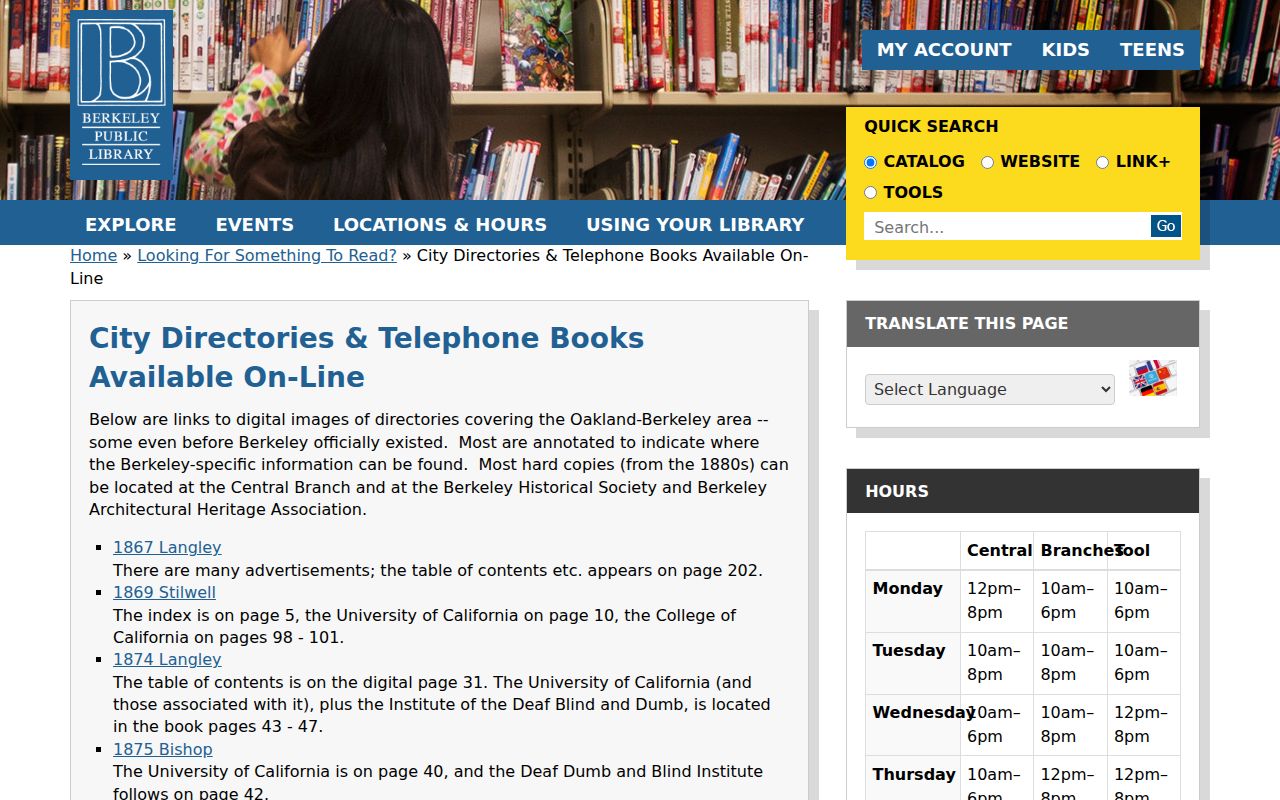
A regional volume can answer a local question, but only after its place coverage is checked. Keep the printed locality wording with the page image and cite the edition, not just a search-result title.
Insider tip. Read the geographic preface before trusting an Albany hit. The subtitle and locality pages can change the meaning of an otherwise convincing name and street match.
Albany in the 1916 Regional City Directory
The 1916 Oakland-Berkeley Telephone Directory is a verified regional example, not proof that every Albany household appears in it. Telephone entries usually center on the subscriber, number, and service address. Adults in the same household may be absent, and a business line can point to a public-facing address without proving that the named person lived there. Treat the book as one dated layer in a wider name-and-address search.
The Oakland Public Library directory and telephone-book holdings add the broader context. Their resource page documents Oakland telephone directories, Polk directories, and Haines reverse directories. Use the edition list and front matter to identify the right year, place, and format before transcribing an entry.
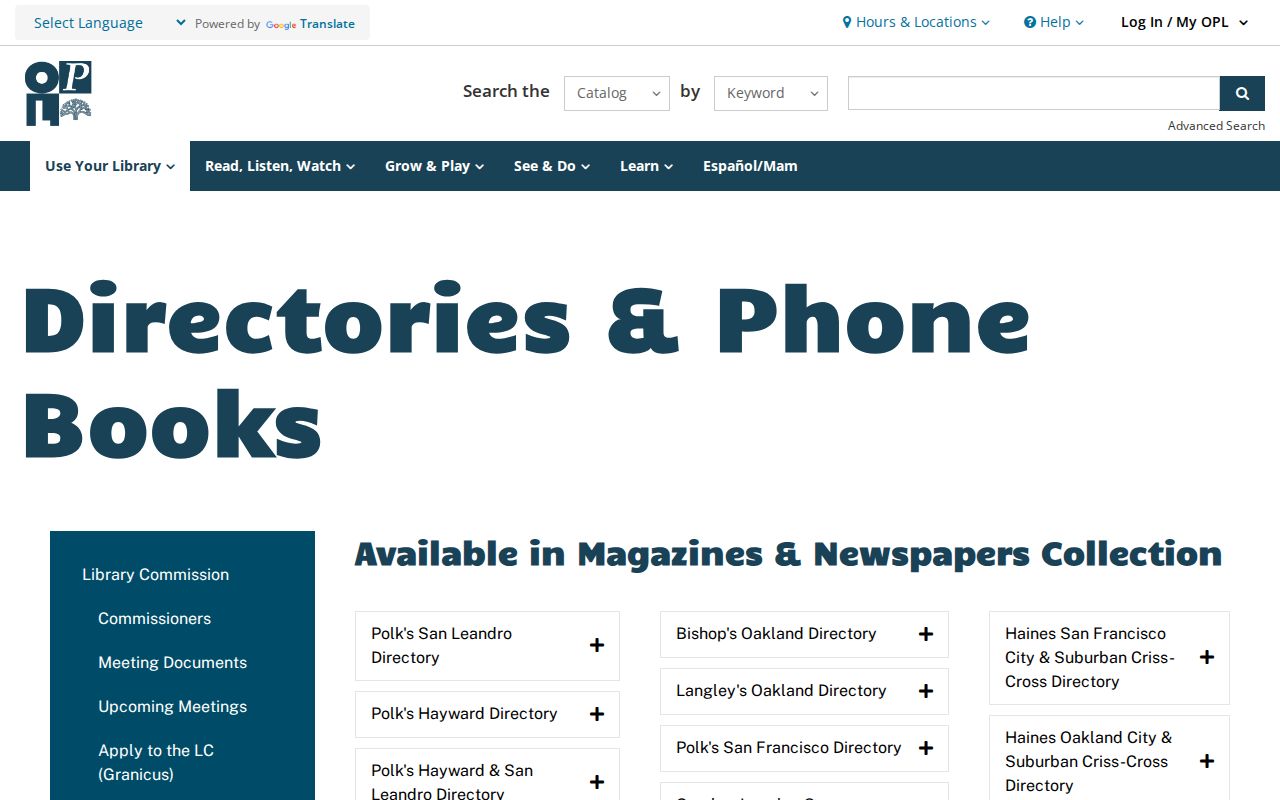
The Oakland shelf image represents a regional research path. It does not turn a telephone subscriber into a full household roster, so pair the printed line with another record when identity matters.
Polk's Regional Directory Set for Albany
Polk's Oakland (California) city directory, including Alameda, Berkeley, Emeryville and Piedmont is cataloged by California Revealed. The record confirms a digitized regional title and its stated included cities. It does not justify assuming that every edition or every Albany address is present. Open the scan, read the subtitle and geographic preface, and note whether Albany appears in the locality or street material.
Polk-style alphabetical entries can add a spouse clue, occupation or business, residence, and notation such as a widow mark. A business entry may have a separate business address. Those fields help place a person in time, but they remain clues until matched with the address, a census household, an obituary, a deed, or another primary record.
Save the edition name and page image number in the research notes. If the scan has an Internet Archive copy or a library record, retain both the repository name and the direct item link. A later reader should be able to tell whether a missing Albany name reflects a search miss, a place gap, or an unavailable page.
Decode an Albany Directory Listing
A directory entry is compressed. Punctuation, initials, and short marks carry much of the meaning. Read the abbreviation key before expanding any line, and keep the printed wording in the transcript. The entry may identify a head of household, a spouse in parentheses, an occupation or business, and a residence. It may also show a home-owner mark or a widow notation, but the symbol must be defined by that edition.
| Name | Surname and given name or initial; a spouse may appear in parentheses in later volumes. |
|---|---|
| Occupation | A historical trade, occupation, or business line when the publisher recorded one. |
| Address | House number and street; “r” commonly means residence, while “bds” can indicate boards. |
| Owner or residence mark | Some runs distinguish a householder or owner; copy the symbol and key instead of guessing. |
| Widow notation | A form such as “wid Charles” can guide genealogy, but it is not a death-date proof. |
Three terms keep a directory page readable:
- Criss-cross directory
- A reverse section arranged by street address, sometimes with a telephone number, so an address can lead back to a name.
- Householder index
- An alphabetical name list used to locate the main household entry; it may not list every adult at the address.
- Abbreviation key
- The publisher's legend for marks such as residence, boarding, widow, or owner status. Photograph or transcribe it before the entries.
Haines Criss-Cross for Albany Addresses
Haines San Francisco City & Suburban Criss-Cross directories reverse the usual search. Instead of starting with a surname, locate a street number, then read the listed occupant or subscriber and any linked telephone information. Oakland Public Library documents this regional resource, but the exact Albany reach must be checked edition by edition. A suburban volume can follow a different boundary from the regional book beside it.
Use a criss-cross entry as an address snapshot, not as proof of ownership or a complete household. Compare the street name, number, unit, and locality. If the result says Berkeley, an older postal exchange or a regional boundary may explain the label. A county parcel record, legal description, or a matching census schedule gives the address clue stronger footing.
Note: A directory absence can mark a move, death, omission, or missing edition; it is never proof by itself.
Pair Albany Directories With Census Years
Federal census schedules are the household checkpoint. As of 2026, public federal schedules reach through the 1950 census under the 72-year access rule. A regional directory can supply a near-yearly name and address snapshot, while a census schedule can add relationship, age, birthplace, and household structure. Neither source is complete on its own. A directory may omit a spouse or child; a census may miss a move between enumeration dates.
The National Archives census research guidance supplies the public-access framework shown in the image below. Pair a directory year with the nearest open census, then explain any mismatch instead of forcing the same household into both records.
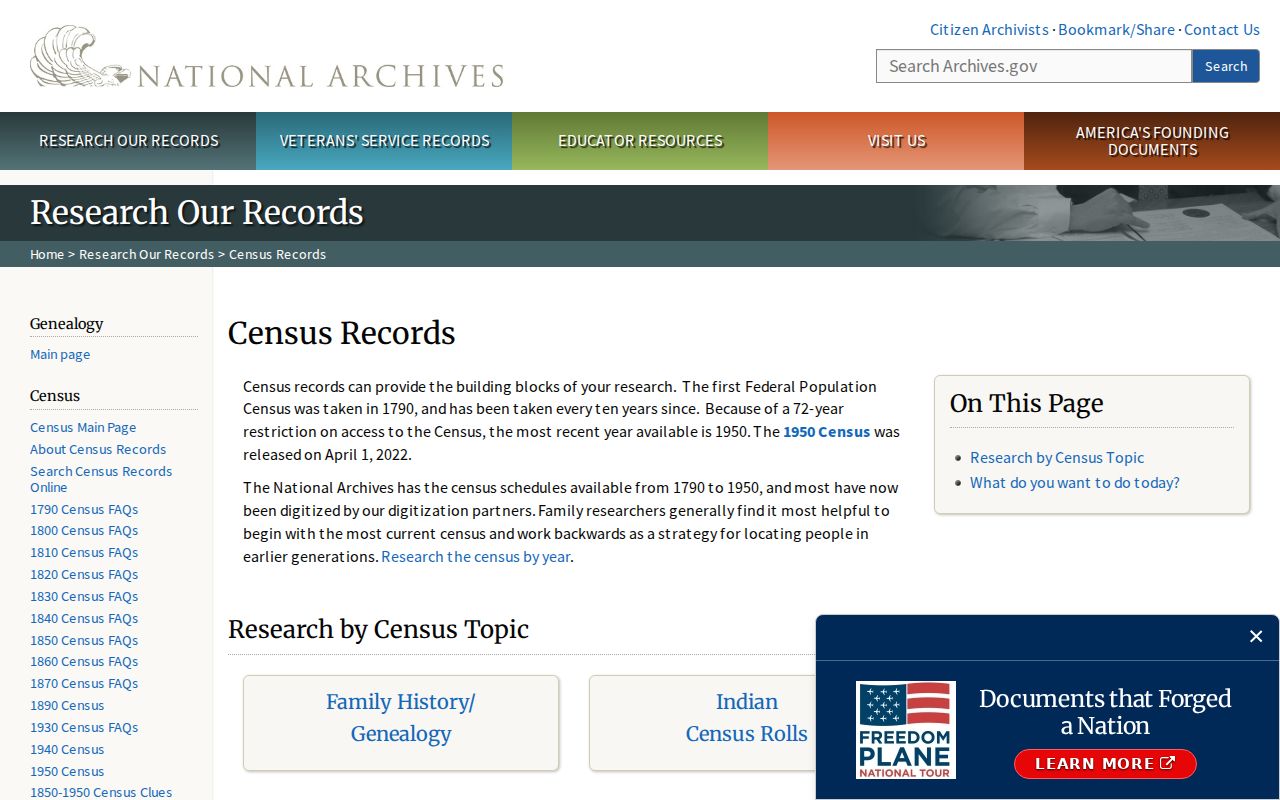
The archive reference is a checkpoint for public schedules, not an Albany directory. It helps set the date boundary while regional books fill the years between census counts.
- Start with a known Albany name, address, or family paper and write the source date.
- Confirm the regional directory's locality statement, then transcribe the entry and page.
- Compare the closest census household, keeping relationship and age fields separate from directory clues.
- Search the next directory under a spouse, widow form, street variant, or nearby address.
- Test a departure with an obituary, probate file, deed, permit, or another census interval.
Albany City Directory Photos Fill Gaps
The Alameda County Library genealogy resources include the Albany Library Historical Photograph Collection, with Albany images from the late 1800s through 2001. Homes, buildings, schools, street scenes, the Peralta Park Hotel, notable people, and events can restore the physical setting around a printed entry. A photograph may not name every occupant, but it can show whether a building, street view, or landmark fits the date claimed by a directory or census record.
Library databases add other paths. Ancestry Library Edition is advertised as in-library access and highlights census images and indexes, maps, biographical indexes, DAR material, the Social Security Death Index, and Civil War collections. HeritageQuest supplies census, family and local histories, research guides, and interactive census maps through library authentication. Fold3 contributes military records. Use the access rule attached to each database rather than treating a library landing page as an unrestricted public roll.
- 1916: the verified Oakland-Berkeley telephone directory example anchors a regional search.
- Late 1800s through 2001: Albany photographs supply a long visual timeline for buildings and streets.
- 1950: the newest public federal census schedule in 2026 supplies a household checkpoint.
- Edition by edition: Polk, Oakland telephone, and Haines volumes must be tested for Albany scope.
Trace an Albany Family Through Directories
Family history work is strongest when each city directory entry becomes one row in a dated worksheet. Capture the edition title, publisher, publication year, locality statement, page image, printed page, exact transcription, and confidence note. Mark “not found,” “not published,” “edition unavailable,” and “place not covered” as separate results. Those labels prevent a gap from being mistaken for a departure.
- Find the first known name or address in a regional volume and confirm that Albany is within the stated coverage.
- Follow the name forward, recording every address, spouse clue, occupation, business line, and printed abbreviation.
- Turn to the Haines criss-cross section when the search begins with a street number rather than a surname.
- Pair directory years with census households, then test changes against photographs, newspapers, probate, deeds, and permits.
- When a present-day parcel question replaces the historical shelf, use the Albany address-record reference to bridge from situs address to county records.
A disappearance deserves several checks. Search the next issue under a spouse or widow form, try a prior or next address, and look for a death notice or probate file. Directory publishers gathered information before publication, so an imprint year is not always the observation date. Preserve contradictions. A careful directory timeline can reconnect a family line without pretending that one book is a complete resident list.